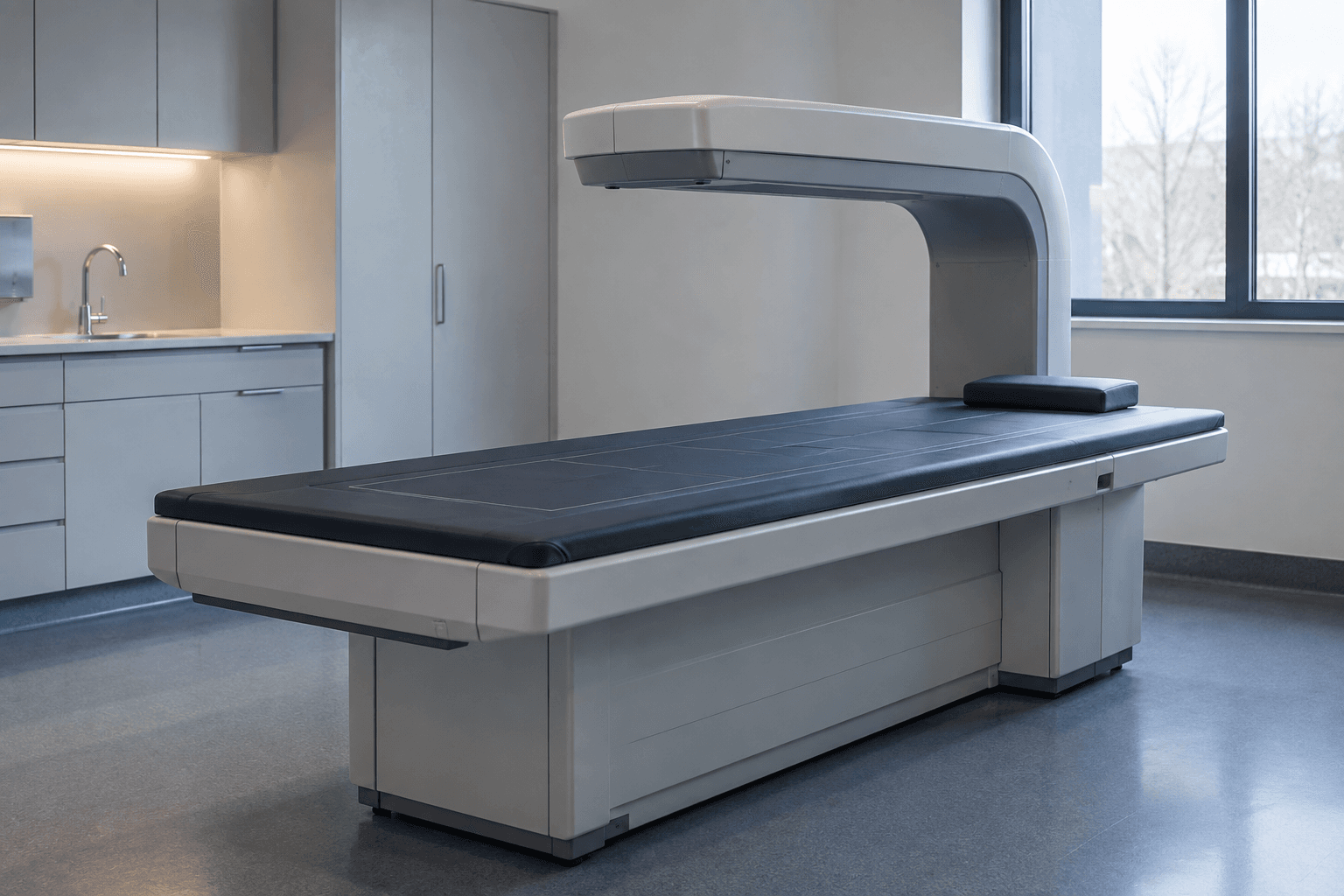
DEXA (dual-energy X-ray absorptiometry) is a reference method for body composition measurement because it does something no other non-invasive technology can: it differentiates between bone mineral content, lean soft tissue, and fat mass at every region of your body with research-grade precision.
The technology works by passing two low-dose X-ray beams at different energy levels through your body. Bone, lean tissue, and fat each attenuate these beams differently, allowing the system to generate a pixel-by-pixel composition map of your entire body. The radiation dose is extremely low — approximately 1-5 microsieverts per scan, which is less than 1/10th the dose of a standard chest X-ray and roughly equivalent to the natural background radiation you absorb during a short flight.
The clinical outputs that matter for longevity: total body fat percentage (measured to within 1-2% accuracy), regional fat distribution (android vs. gynoid ratio — a powerful predictor of cardiometabolic risk), visceral adipose tissue volume (VAT — quantified in grams, not estimated), appendicular lean mass index (ALM/height squared — the diagnostic criterion for sarcopenia used in the European Working Group on Sarcopenia definition), and bone mineral density (T-scores for lumbar spine and femoral neck — essential for osteoporosis screening).
Body composition belongs in a longevity assessment for a simple reason. Muscle mass supports metabolic health, protects against falls and helps you stay independent as you age, while excess visceral fat is linked with chronic inflammation and cardiometabolic disease. DEXA gives you precise, reproducible numbers for both.
At Genoryx, your DEXA results are integrated with your biomarker panel and reviewed in a comprehensive physician consultation. We do not hand you a printout and send you home — we translate the data into a specific, actionable plan. Book a consultation with our longevity physician to schedule your baseline DEXA scan.