Cardiorespiratory fitness, measured as VO2 max, is one of the strongest predictors of long-term survival. In a 2018 study of 122,007 patients who had treadmill testing (Mandsager K et al., JAMA Network Open), lower fitness was associated with a mortality risk comparable to or greater than traditional risk factors such as smoking, diabetes and coronary artery disease. Risk fell as fitness rose, and no upper limit of benefit was observed. The fittest group had about one-fifth the adjusted mortality risk of the least fit. That study estimated fitness from treadmill performance rather than measuring VO2 max directly, and it shows association, not proof that getting fitter will extend your life.
VO2 max measures the maximum volume of oxygen your body can utilize during intense exercise, expressed in milliliters per kilogram of body weight per minute (mL/kg/min). It reflects the integrated function of your heart (cardiac output), lungs (gas exchange), blood (oxygen-carrying capacity), and skeletal muscle (mitochondrial oxygen utilization). When any link in this chain weakens — as naturally occurs with aging — your VO2 max declines, and with it your functional capacity, metabolic resilience, and statistical life expectancy.
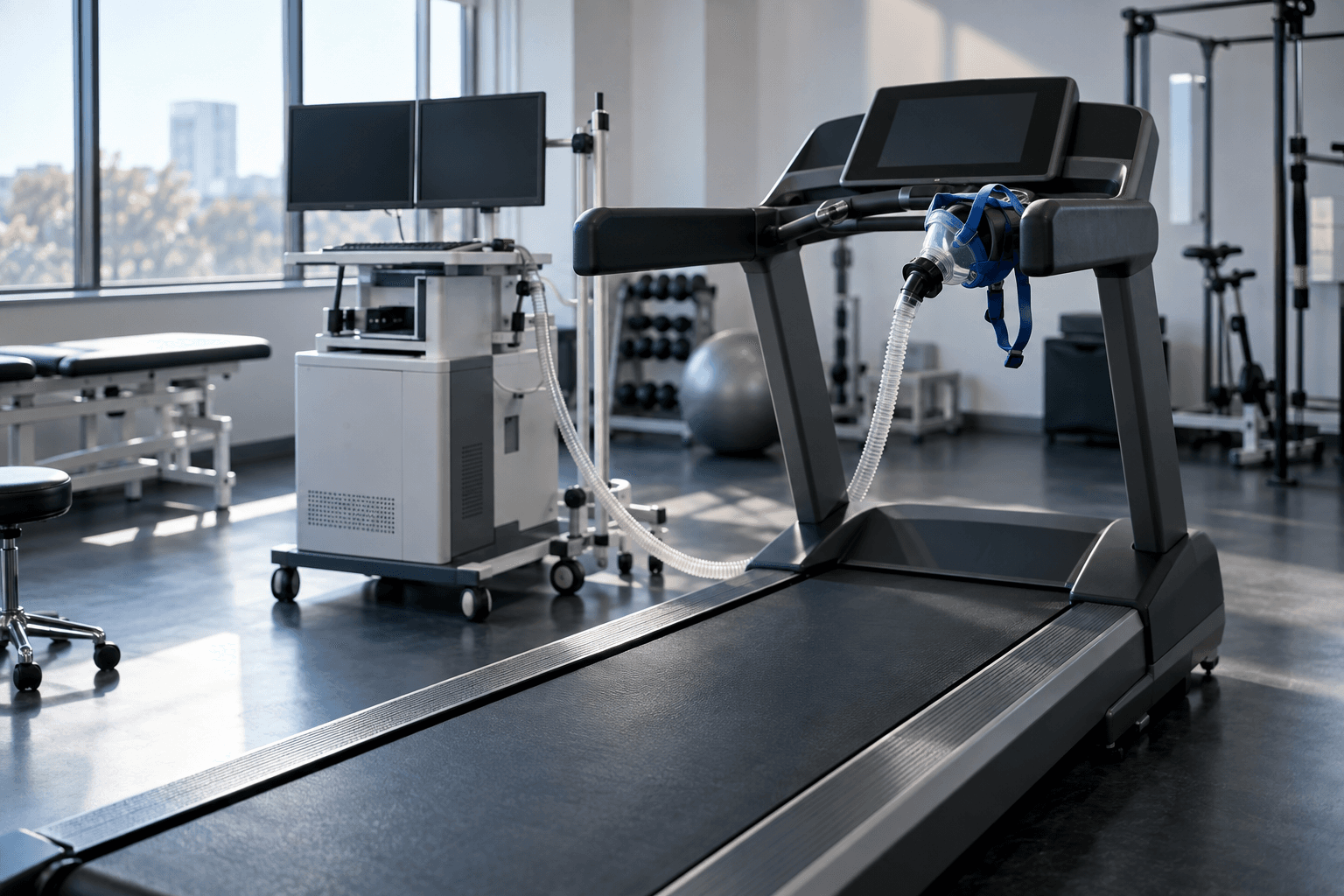
The test itself involves exercising on a treadmill or cycle ergometer while wearing a metabolic analyzer mask that measures the precise volume and composition of every breath. Exercise intensity increases in staged increments until you reach volitional exhaustion. The data captured includes your VO2 max, anaerobic threshold (VT1 and VT2), respiratory exchange ratio, fat and carbohydrate oxidation rates at each intensity zone, and heart rate recovery kinetics.
Why this matters practically: your anaerobic threshold determines the exercise intensity you can sustain for prolonged periods. Your fat oxidation curve reveals how efficiently your metabolism utilizes fat as fuel. Your heart rate recovery predicts autonomic nervous system health. Together, these metrics allow us to design an exercise prescription that is specific to your physiology — not generic guidelines pulled from a poster in a gym.
We treat VO2 max as one of the most useful numbers in a longevity assessment, and we measure it with clinical-grade equipment interpreted by a physician, not a smartwatch estimate. Book a consultation with our longevity physician to schedule your test.