In this article
Your Hair Is Telling You Something
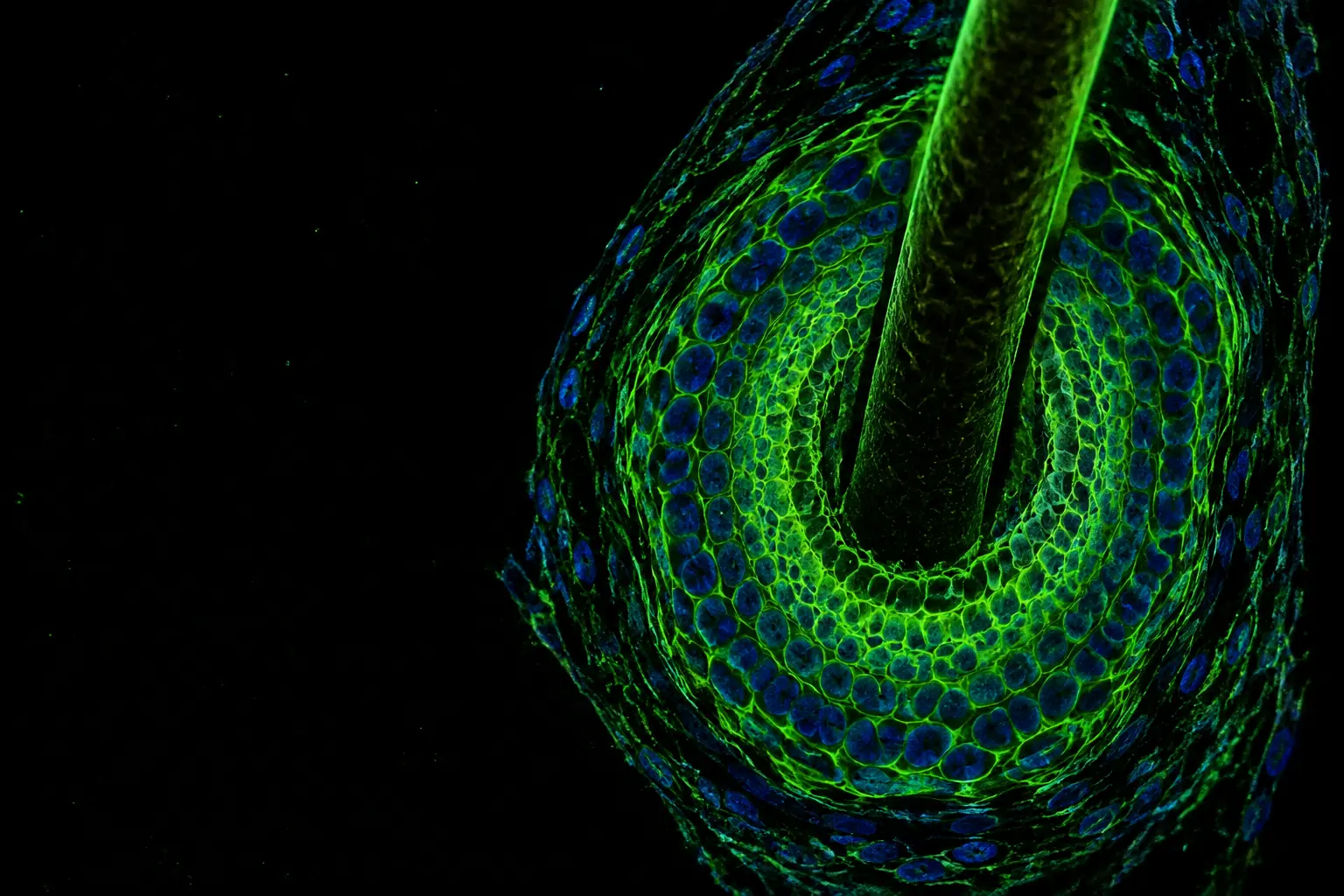
Hair is one of the most metabolically active tissues in the body. When something is wrong systemically — a hormonal imbalance, nutrient deficiency, or metabolic dysfunction — hair is often the first tissue to show it.
DHT: The Androgen Connection
DHT binds to androgen receptors with double the affinity of testosterone and a dissociation rate five times slower. The difference between hair loss and hair retention is androgen receptor sensitivity, not DHT levels.
Thyroid: The Silent Hair Killer
Both hypothyroidism and hyperthyroidism cause diffuse hair loss. Subclinical thyroid dysfunction (TSH 3.5-4.5) can cause hair thinning long before formal diagnosis.
Insulin Resistance and Hair
In women, insulin resistance stimulates ovarian androgen production. In men, it increases 5-alpha-reductase activity and promotes scalp inflammation.
The Nutrient Deficiency Layer
A 2025 study found associations between hair loss and reduced iron, ferritin, copper, selenium, vitamin D, and B12. Ferritin below 40 ng/mL is associated with increased shedding.
The Longevity Medicine Approach
Comprehensive hormonal panel (testosterone, DHT, thyroid, cortisol, insulin), nutrient assessment, inflammatory markers, and metabolic assessment — then treat root causes before topical solutions.
At Genoryx, we approach hair loss as a systemic health signal. Book a consultation and discover what your hair is telling you about your internal health.
Go deeper
Markers in this article
This article is for education. It is not a diagnosis or a treatment plan; decisions about tests, medicines or supplements belong in a consultation with a physician who knows your history.

About the author
Dr. R. Brahmananda Reddy
MSc Dermatology, University of Hertfordshire (UK) · Founder & Chief Longevity Physician
MBBS · MSc Dermatology (University of Hertfordshire, UK) · Fellowship in Aesthetic & Regenerative Medicine (University of Greifswald, Germany). 13+ years in clinical practice.
Full profile