In this article
The Experiment Nobody Asked For (But Everyone Needs)
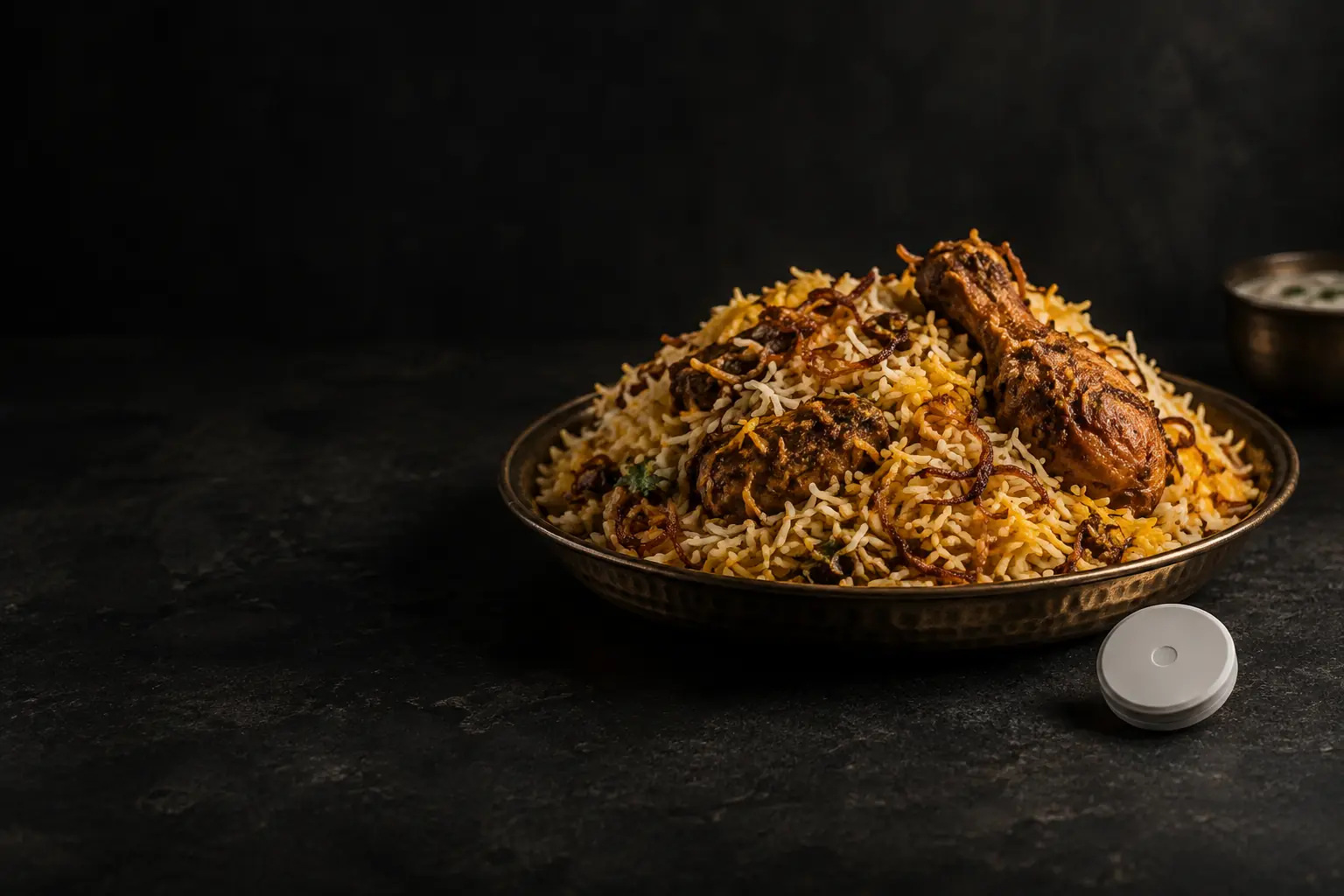
Hyderabadi biryani is a masterpiece of culinary engineering — fragrant basmati rice layered with spiced meat, saffron, and ghee. It is also a metabolic challenge that tells us something profound about individual glucose responses and why generic dietary advice so often fails.
A continuous glucose monitor (CGM) shows what happens inside the body after a typical serving of biryani, and it illustrates a principle that is reshaping nutrition science: the same food does not produce the same glucose response in every person.
What a CGM Reveals
A continuous glucose monitor measures interstitial glucose every 1-5 minutes, creating a detailed map of your blood sugar landscape throughout the day. Unlike a fasting glucose test — which captures a single snapshot — a CGM shows the full movie: how high your sugar spikes after meals, how long it stays elevated, and how quickly it returns to baseline.
This is transformative information because postprandial glucose spikes — even in non-diabetic individuals — are increasingly linked to inflammation, vascular damage, glycation, and long-term metabolic dysfunction.
The Biryani Response
A 2015 landmark study in Cell by Zeevi and colleagues demonstrated this exact phenomenon across 800 participants: the glycemic response to identical foods varied by up to 300% between individuals, driven by differences in gut microbiome, genetics, body composition, and metabolic status.
The Modifiers That Matter
Several factors powerfully modify the glucose response to any high-carbohydrate meal:
Meal order: Eating vegetables and protein before carbohydrates can reduce the glucose spike by 30-40%. A 2019 study in BMJ Open Diabetes Research & Care demonstrated that simply eating the same meal in a different order significantly blunted postprandial glucose.
Walking after meals: A 15-minute walk after eating reduces peak glucose by approximately 20-30%. The muscle contractions drive glucose uptake independently of insulin.
Prior exercise: A Zone 2 training session earlier in the day dramatically improves glucose disposal at the next meal by enhancing insulin sensitivity and creating glycogen storage capacity in muscles.
Sleep quality: Even one night of poor sleep can increase postprandial glucose responses by 15-25% the following day.
The Lesson Is Not to Avoid Biryani
This is not a case against biryani — it is a case for personalized nutrition informed by data. Some people handle biryani beautifully. Others need strategies to mitigate the glucose impact. You cannot know which category you fall into without measuring.
At Genoryx, we use CGM-guided nutrition assessments to help you understand your unique glucose responses. Book a consultation to discover what your favorite foods are actually doing inside your body — and how to enjoy them smarter.
Go deeper
Markers in this article
Sources
Studies named in this article that we matched to the original paper. A study described without enough detail to identify it is not listed.
- 01Zeevi D, Korem T, Zmora N, et al. Personalized Nutrition by Prediction of Glycemic Responses. Cell. 2015. doi:10.1016/j.cell.2015.11.001 (opens in a new tab)
- 02Shukla AP, Andono J, Touhamy SH, et al. Carbohydrate-last meal pattern lowers postprandial glucose and insulin excursions in type 2 diabetes. BMJ Open Diabetes Research & Care. 2017. doi:10.1136/bmjdrc-2017-000440 (opens in a new tab)
This article is for education. It is not a diagnosis or a treatment plan; decisions about tests, medicines or supplements belong in a consultation with a physician who knows your history.

About the author
Dr. R. Brahmananda Reddy
MSc Dermatology, University of Hertfordshire (UK) · Founder & Chief Longevity Physician
MBBS · MSc Dermatology (University of Hertfordshire, UK) · Fellowship in Aesthetic & Regenerative Medicine (University of Greifswald, Germany). 13+ years in clinical practice.
Full profile