Now accepting new Members for precision longevity programs.Learn more
PRP Therapy
Platelet-Rich Plasma therapy harnessing your body's own growth factors for tissue repair, skin rejuvenation, and regenerative healing.
45-60 minutes (including blood draw, processing, and treatment)
3-4 sessions (4-6 weeks apart), then maintenance every 6-12 months
Mild redness for 24-48 hours (facial); minimal for other applications
Platelet-Rich Plasma (PRP) therapy sits at the intersection of regenerative medicine and longevity science. By concentrating your body's own growth factors and reintroducing them to targeted tissues, PRP stimulates a controlled healing cascade that produces genuine tissue regeneration — not the temporary effects of synthetic fillers or toxins, but actual biological repair.
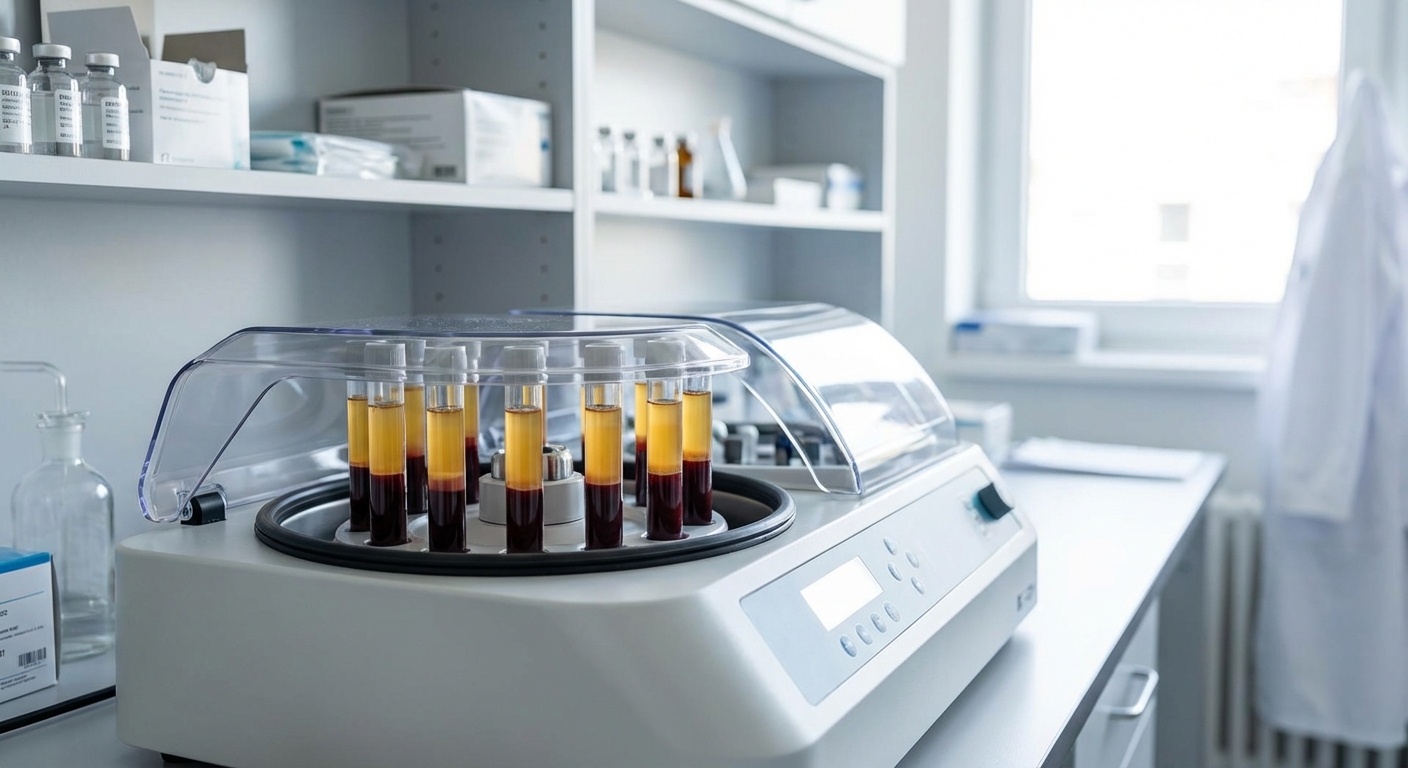
The science is straightforward. A small blood sample is drawn and processed through a centrifugation protocol that separates and concentrates platelets to 4-6 times their baseline levels. Platelets are not just clotting agents — they are biological delivery vehicles packed with growth factors: PDGF (platelet-derived growth factor) for cell proliferation and tissue repair, VEGF (vascular endothelial growth factor) for new blood vessel formation, TGF-beta (transforming growth factor) for collagen synthesis and tissue remodeling, EGF (epidermal growth factor) for skin cell regeneration, and FGF (fibroblast growth factor) for wound healing and angiogenesis.
When this concentrated cocktail of growth factors is injected into targeted tissue — whether facial skin, scalp, joints, or injured tendons — it triggers a coordinated regenerative response: new collagen formation (neocollagenesis), new blood vessel growth (angiogenesis), stem cell recruitment, and extracellular matrix remodeling. The result is genuine tissue rejuvenation, not a cosmetic overlay.
For facial rejuvenation, PRP is often called the "vampire facial" — a term we find reductive, but the underlying therapy is substantive. A 2019 systematic review in Aesthetic Surgery Journal confirmed PRP's efficacy for skin rejuvenation, demonstrating improvements in skin texture, elasticity, and volume that are attributable to actual dermal collagen remodeling. Unlike synthetic fillers that add temporary volume, PRP improves skin quality from the cellular level upward.
For hair restoration, PRP acts directly on follicular stem cells, extending the anagen (growth) phase and increasing hair shaft diameter. Clinical studies show measurable increases in total hair count and hair density after 4-6 sessions.
PRP bridges what we call "longevity aesthetics" — the philosophy that looking younger and being biologically healthier are not separate goals but two expressions of the same underlying biology. Book a consultation with our longevity physician to explore how PRP therapy can support your regenerative health goals.