In this article
Beauty That Begins at the Cellular Level
There is a quiet revolution happening at the intersection of dermatology and longevity medicine. It is called longevity aesthetics, and it challenges a fundamental assumption of the beauty industry: that aging skin is primarily a surface-level problem requiring surface-level solutions.
The truth is far more interesting. Your skin is a biomarker — a visible, measurable indicator of what is happening inside your body at the molecular level. And when we understand the biology driving skin aging, we unlock interventions that are both more effective and more lasting than anything a cream can offer.
The Biology of Skin Aging
Skin aging is driven by two overlapping processes: intrinsic aging (genetically programmed cellular decline) and extrinsic aging (environmental damage from UV radiation, pollution, and lifestyle factors). Both converge on a few key mechanisms:
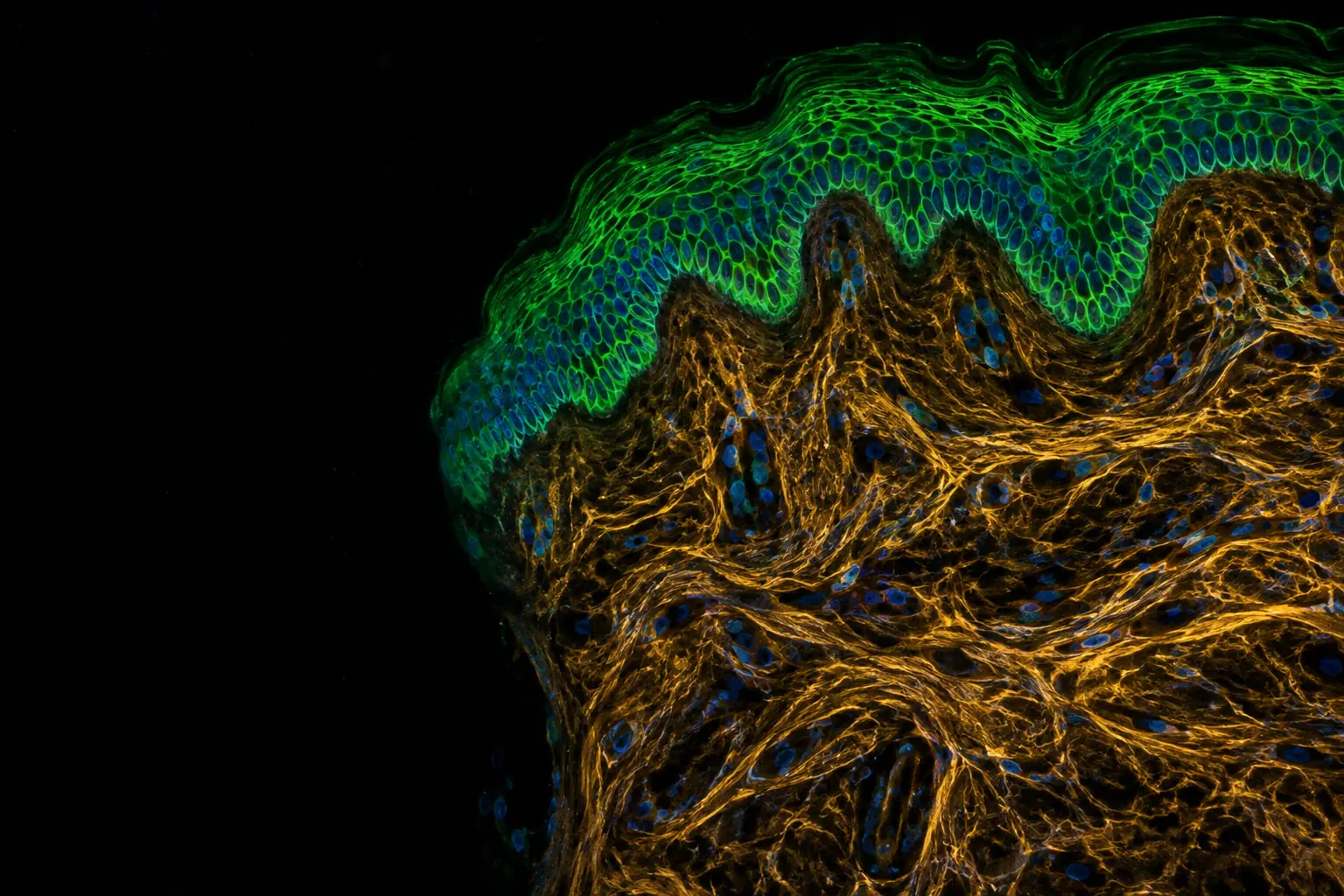
Collagen degradation: After age 25, you lose approximately 1-1.5% of your dermal collagen per year. By age 50, nearly 30% of your collagen infrastructure has deteriorated. This loss manifests as wrinkles, sagging, and thinning skin.
Glycation: When excess blood sugar binds to collagen and elastin fibers, it forms stiff, dysfunctional molecules called advanced glycation end-products (AGEs). These AGEs make skin rigid, discolored, and prone to damage. People with poorly controlled blood sugar age visibly faster — and the mechanism is glycation.
Mitochondrial dysfunction: Skin cells are metabolically active. When mitochondrial efficiency declines, cells produce less energy for repair and more oxidative stress that damages surrounding tissue.
What Your Skin Reveals About Your Health
Research published in Aging Cell (2020) demonstrated that perceived facial age correlates significantly with internal biological age markers including telomere length, inflammatory markers, and metabolic health. In other words, if you look older than your years, your cells may be aging faster than expected.
Specific skin features map to specific internal processes: yellowing or sallowness suggests glycation. Under-eye hollowing may indicate mitochondrial decline or poor microcirculation. Persistent redness often signals systemic inflammation.
The Inside-Out Approach
Longevity aesthetics does not reject topical treatments or aesthetic procedures. It enhances them by addressing root causes simultaneously. Consider this: a patient undergoing microneedling to stimulate collagen while also optimizing their blood sugar, reducing systemic inflammation, and supporting mitochondrial health through targeted supplementation will see compounding benefits that far exceed either approach alone.
This is the principle of biological synergy, and it is where longevity medicine and aesthetics converge most powerfully.
Measuring What Matters
At Genoryx, we approach skin health through the lens of biomarkers: HbA1c for glycation risk, hs-CRP for inflammation, advanced lipid profiles for vascular skin health, and hormonal panels that influence collagen synthesis and skin hydration. When you measure the biology, you can intervene with precision.
If you are interested in an approach to skin health that goes deeper than the surface, book a consultation and let us examine what your skin is trying to tell you about your biology.
Go deeper
Markers in this article
This article is for education. It is not a diagnosis or a treatment plan; decisions about tests, medicines or supplements belong in a consultation with a physician who knows your history.

About the author
Dr. R. Brahmananda Reddy
MSc Dermatology, University of Hertfordshire (UK) · Founder & Chief Longevity Physician
MBBS · MSc Dermatology (University of Hertfordshire, UK) · Fellowship in Aesthetic & Regenerative Medicine (University of Greifswald, Germany). 13+ years in clinical practice.
Full profile