In this article
The Screening Gap
Standard cancer screening in India typically covers a narrow range: mammography for breast cancer, Pap smears for cervical cancer, PSA for prostate cancer, and colonoscopy for colorectal cancer. These are important and evidence-backed screens. But they cover fewer than 10 of the more than 200 types of cancer that can occur in the human body.
The majority of cancers — including pancreatic, kidney, liver, and many others — have no standard screening protocol. They are detected only when symptoms appear, which is often when the disease is already advanced. In cancer, early detection is everything. Five-year survival rates for most cancers drop precipitously between stage I and stage IV detection.
The Full-Body MRI Approach
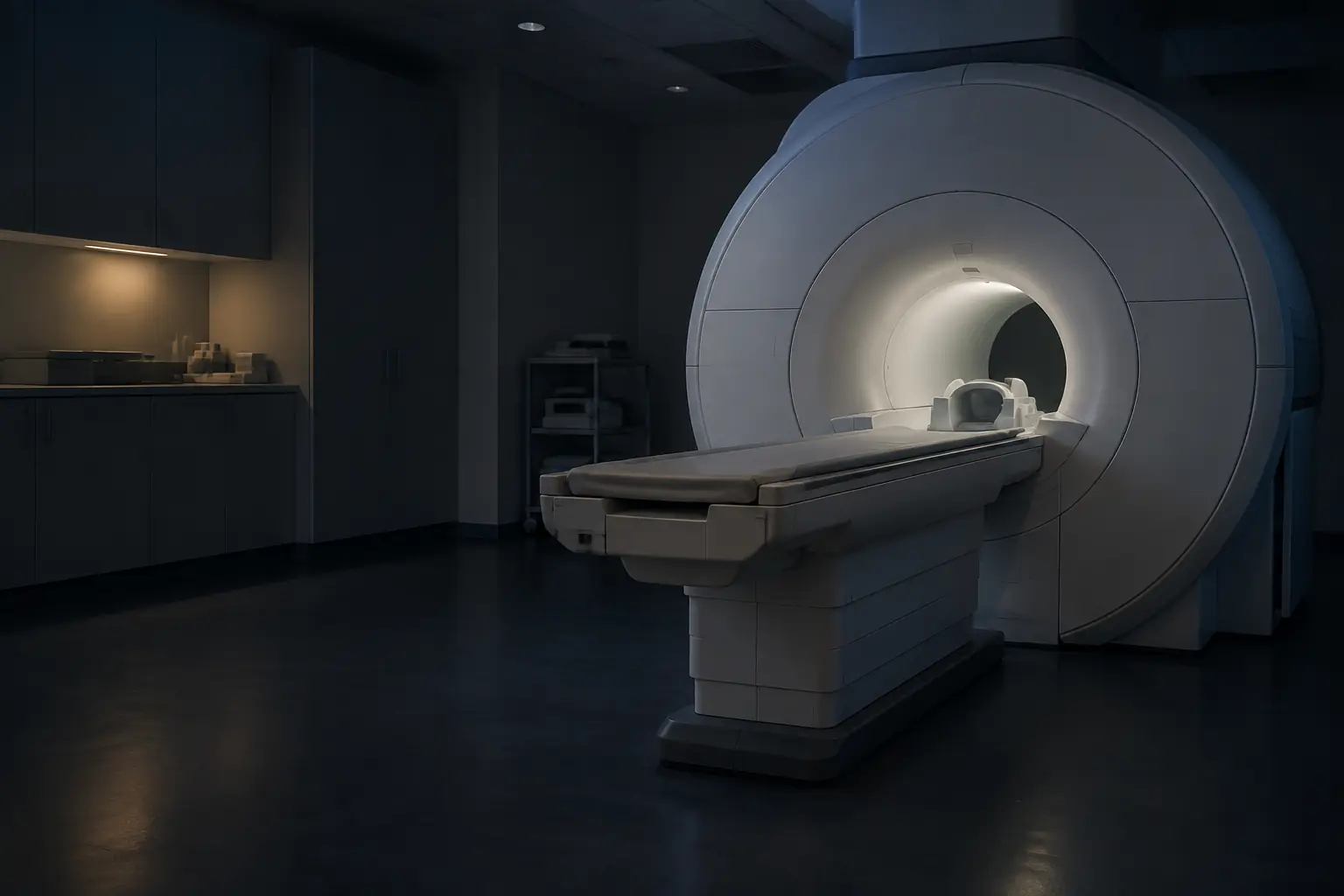
Diffusion-weighted whole-body MRI (DWIBS) has emerged as a promising tool for multi-organ cancer screening. Unlike CT scans, MRI uses no ionizing radiation, making it suitable for repeated screening. Diffusion-weighted sequences detect areas of abnormally restricted water movement — a hallmark of many tumor types — providing functional information beyond simple anatomy.
A 2020 study published in The Lancet Oncology evaluated full-body MRI screening in over 12,000 participants and found that it detected clinically significant cancers across multiple organ systems, including cancers that would not have been found by standard screening protocols.
What a Full-Body MRI Can Detect
A comprehensive MRI screen can evaluate:
Brain: Tumors, aneurysms, white matter disease, and structural abnormalities.
Chest: Lung nodules, mediastinal masses, and cardiac structure.
Abdomen: Liver, pancreatic, kidney, and adrenal masses. Pancreatic cancer — one of the deadliest malignancies — has no standard screening method but can be detected incidentally on abdominal MRI.
Pelvis: Prostate, uterine, ovarian, and bladder abnormalities.
Spine and musculoskeletal system: Bone lesions, disc pathology, and soft tissue abnormalities.
Limitations and Nuances
Full-body MRI is not without drawbacks. The most significant is the challenge of incidental findings — abnormalities that are detected but turn out to be benign. These findings can trigger anxiety, additional testing, and occasionally unnecessary biopsies. The rate of incidental findings varies but can be as high as 30-40% in some studies.
This is why context matters enormously. A full-body MRI performed as part of a comprehensive longevity assessment — where the physician can correlate imaging findings with blood biomarkers, family history, and clinical context — is far more valuable than an isolated scan interpreted without clinical framing.
Additionally, certain cancers (particularly very early-stage mucosal cancers of the GI tract) are better detected by endoscopy than MRI. Full-body MRI complements but does not replace organ-specific screening methods where they exist.
Who Should Consider Full-Body MRI?
Full-body MRI screening is most valuable for individuals with strong family histories of cancer, those with genetic predispositions (such as BRCA mutations or Lynch syndrome), and health-conscious individuals who want the most comprehensive screening available. It is also increasingly being adopted by executives and high-net-worth individuals as part of annual longevity assessments.
At Genoryx, we offer advanced screening protocols that include full-body MRI interpreted within the context of your complete health profile. Book a consultation to discuss whether advanced imaging belongs in your preventive health plan.
This article is for education. It is not a diagnosis or a treatment plan; decisions about tests, medicines or supplements belong in a consultation with a physician who knows your history.

About the author
Dr. R. Brahmananda Reddy
MSc Dermatology, University of Hertfordshire (UK) · Founder & Chief Longevity Physician
MBBS · MSc Dermatology (University of Hertfordshire, UK) · Fellowship in Aesthetic & Regenerative Medicine (University of Greifswald, Germany). 13+ years in clinical practice.
Full profile